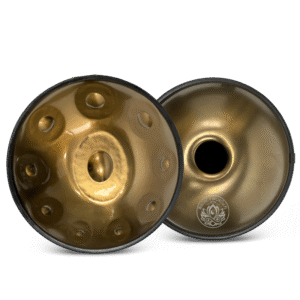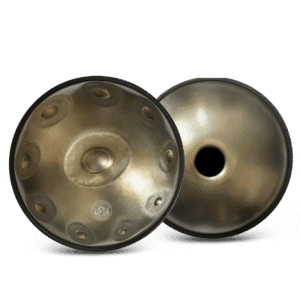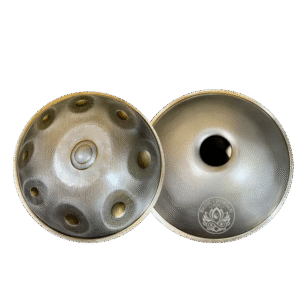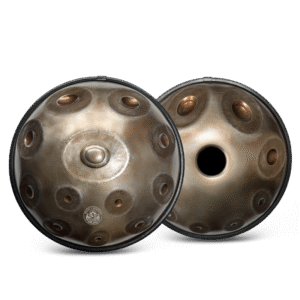
Hi! If you've been dreaming of producing those ethereal, meditative sounds from your own handpan but don't know where to start, this article is for you. You'll learn the basics step by step, including how to properly strike the sound fields to avoid dull hits and enjoy pure sound. Ready for travel into the world of relaxation and creativity? Let's get started!
Handpan positioning and body posture
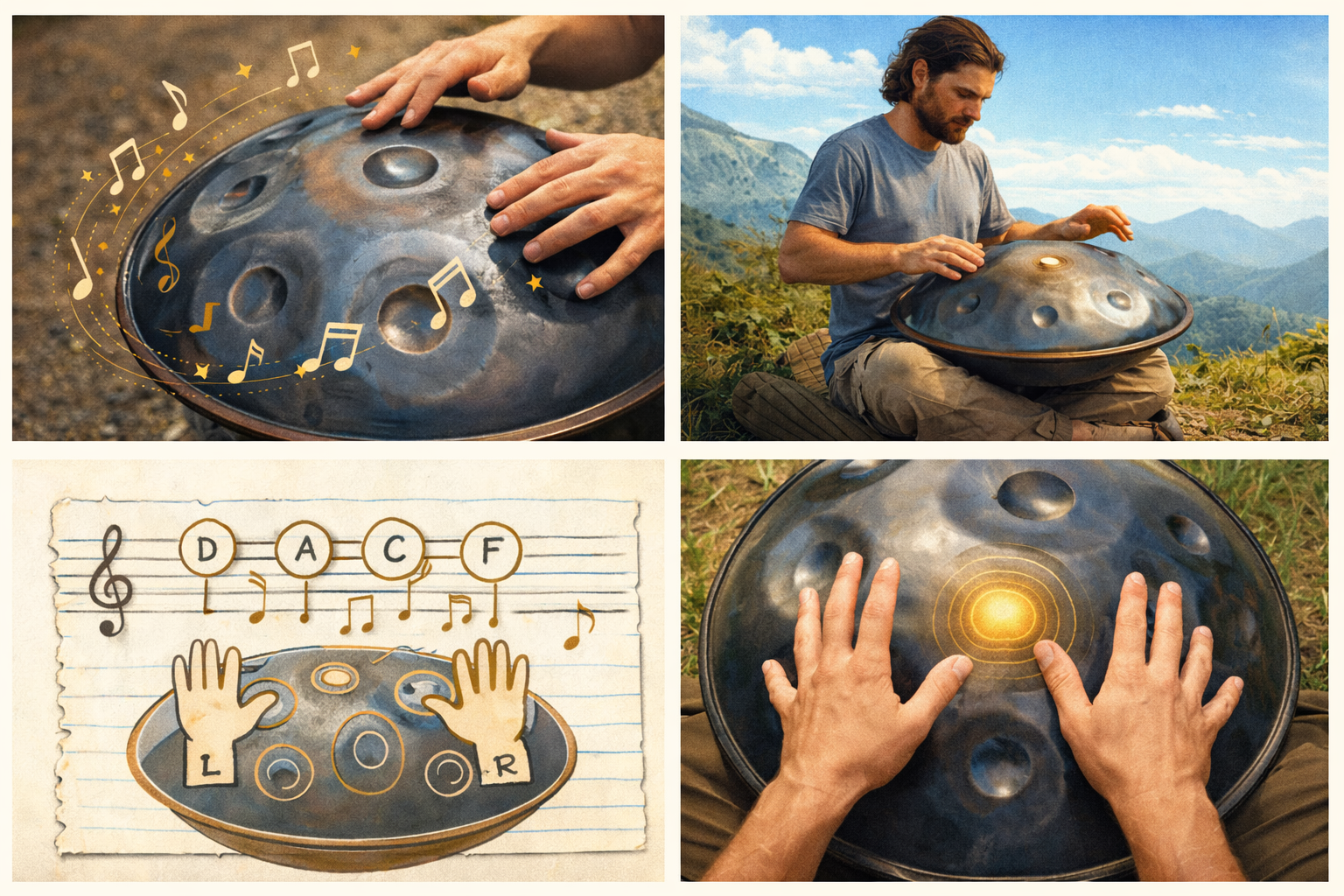
Place handpan On your knees, with the lowest note directed toward your belly – this is a natural position for beginners, providing easy access to all sound fields. Sit upright with relaxed shoulders, legs spread wide or crossed (on the floor or a chair) to prevent the instrument from sliding across your thighs. For better stability, consider non-slip grips (e.g., Rhythm Rest); avoid anything under the bottom of the handpan that would block the Gu soundhole.
Hitting technique – the key to a clear sound
Tap gently with your fingertips (not your nails!) sweet spot – the edge of the sound field between the flat area and the beginning of the dimple. Perform the "water drop" motion: the finger falls with the arm wave (from shoulder to elbow to wrist), rebounding automatically upon contact. Relax your hand immediately after striking, without jerking. Striking too hard or with a flat hand produces a dull, metallic sound; practice lightly to achieve resonance and long sustain.
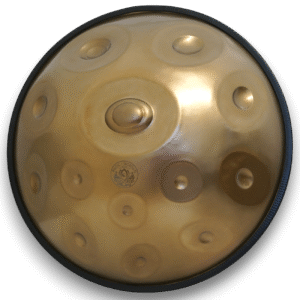
For the central ding (lowest note), use your thumb or middle finger, aiming for the upper dome with similar softness. Avoid striking the notes with the flat of your hand—this dampens the vibration; use the palm strike only between the squares for rhythm.
First exercises for single sounds
Start with Ding: strike 10 times slowly, listening for resonance—aim for a warm, sustained tone without clang. Move to the soundboard: play each note one at a time, alternating between your left and right hands to build coordination. Practice for 30 seconds per note, noting the differences in tone between your fingers (the thumb produces a warmer sound, the fingers a brighter one).
Basic rhythms and sequences for beginners
The simplest 4/4 rhythm (Ding-1-4-1):
- Right hand: Ding (center).
- Left: Note 1 (closest to Ding on the left).
- Right: note 4 (higher on the right).
- Left: note 1 again.
Repeat: Ding-1-4-1 – sounds melodic right away!
Add groove: Harder on the 1st and 3rd beats (Ding, note 4).
Next step: Ding-2-4-2 (instead of 1, replace note 2).
Practice with a 60 BPM metronome, record yourself – you will hear how beautifully it resonates!
Developing Your Game – Improvisation and Tips
Experiment with dynamics: soft for meditation, accents for energy. Practice 10-15 minutes daily: single notes (2 min), rhythm (2 min), improvisation (5 min). Remember to keep your hands clean and dry—moisture dampens sound.
Z czasem odkryjesz, że handpan to nie tylko instrument, ale ścieżka do wewnętrznego spokoju. W Miłość i Spokój tworzymy handpans, które rezonują z Twoją duszą – zacznij grać dziś i poczuj magię!