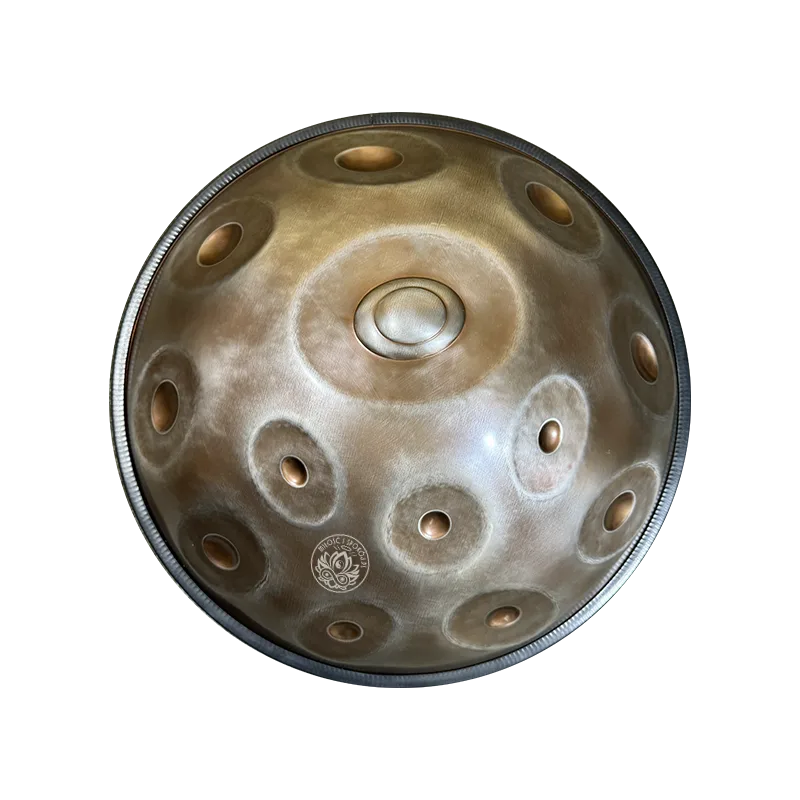
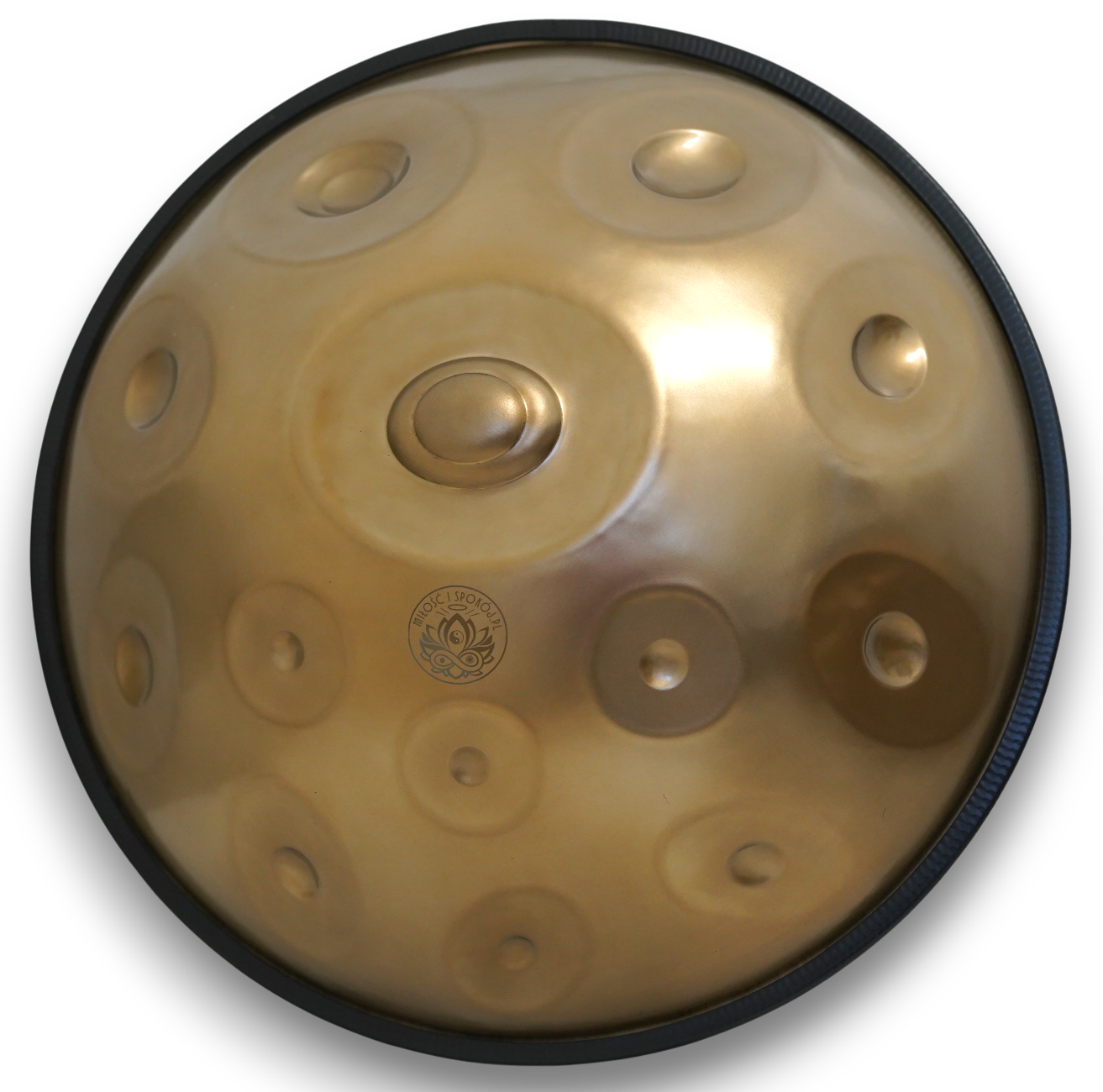

Handpan E Amara 20 Tones Premium Stainless Steel
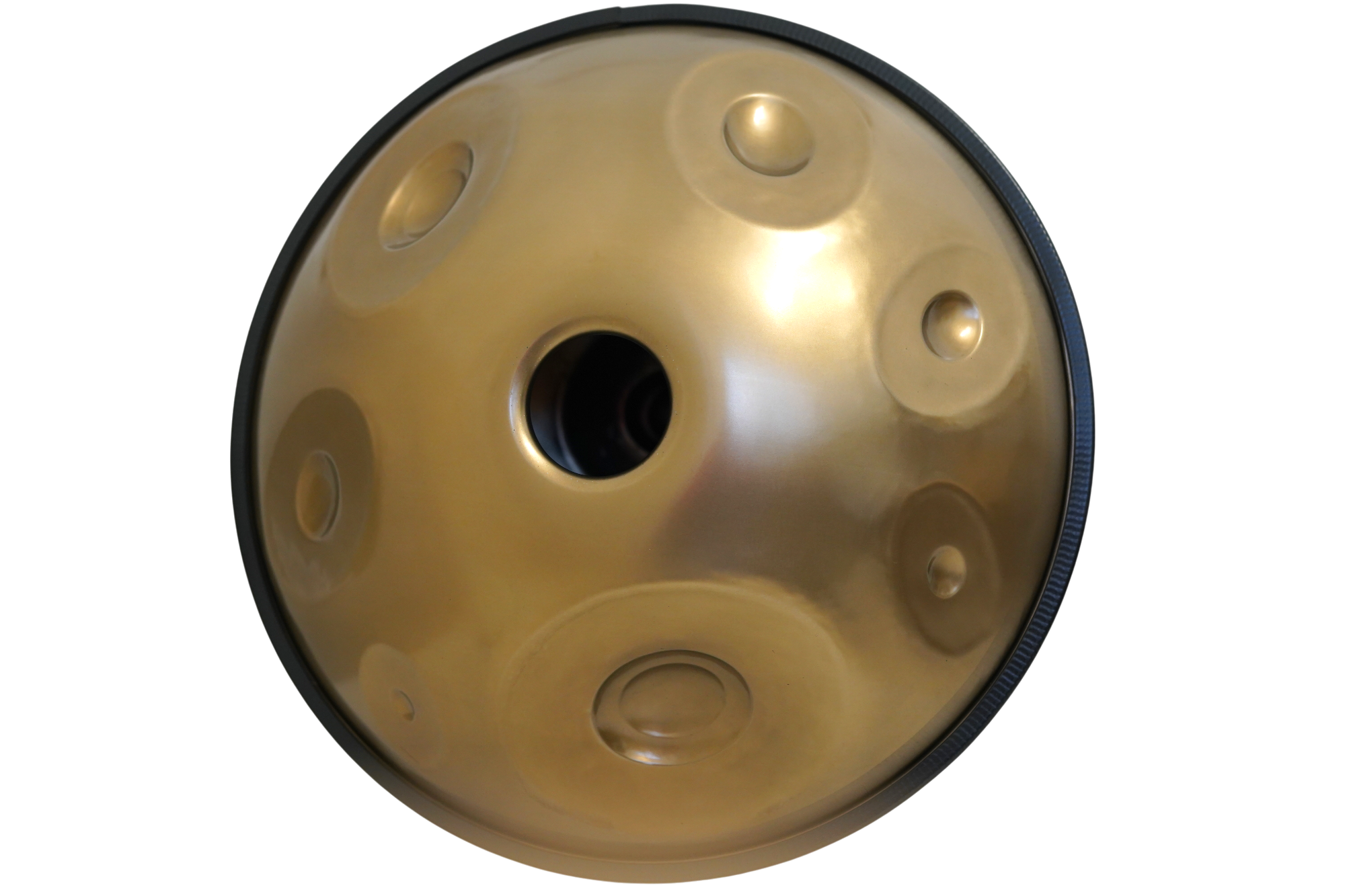
Handpan E Amara 20 (13+7) is a ze mutant Premium stainless steel approximately 1.2 mm, with a diameter of 53 cm. The lower dome adds 7 notes to the standard 13 at the top, giving a full 20 notes to play.
Technical parameters of the E Amara 20 handpan
Material: Premium stainless steel
Size: 53cm
Scale: E Amara
Number of sounds: 20 (13+7)
Package Contents: 432 Hz / 440 Hz (optional)
Color: Gold / Brown / Silver: spiral / Silver: retro 1, 2, 3 / Gold spiral
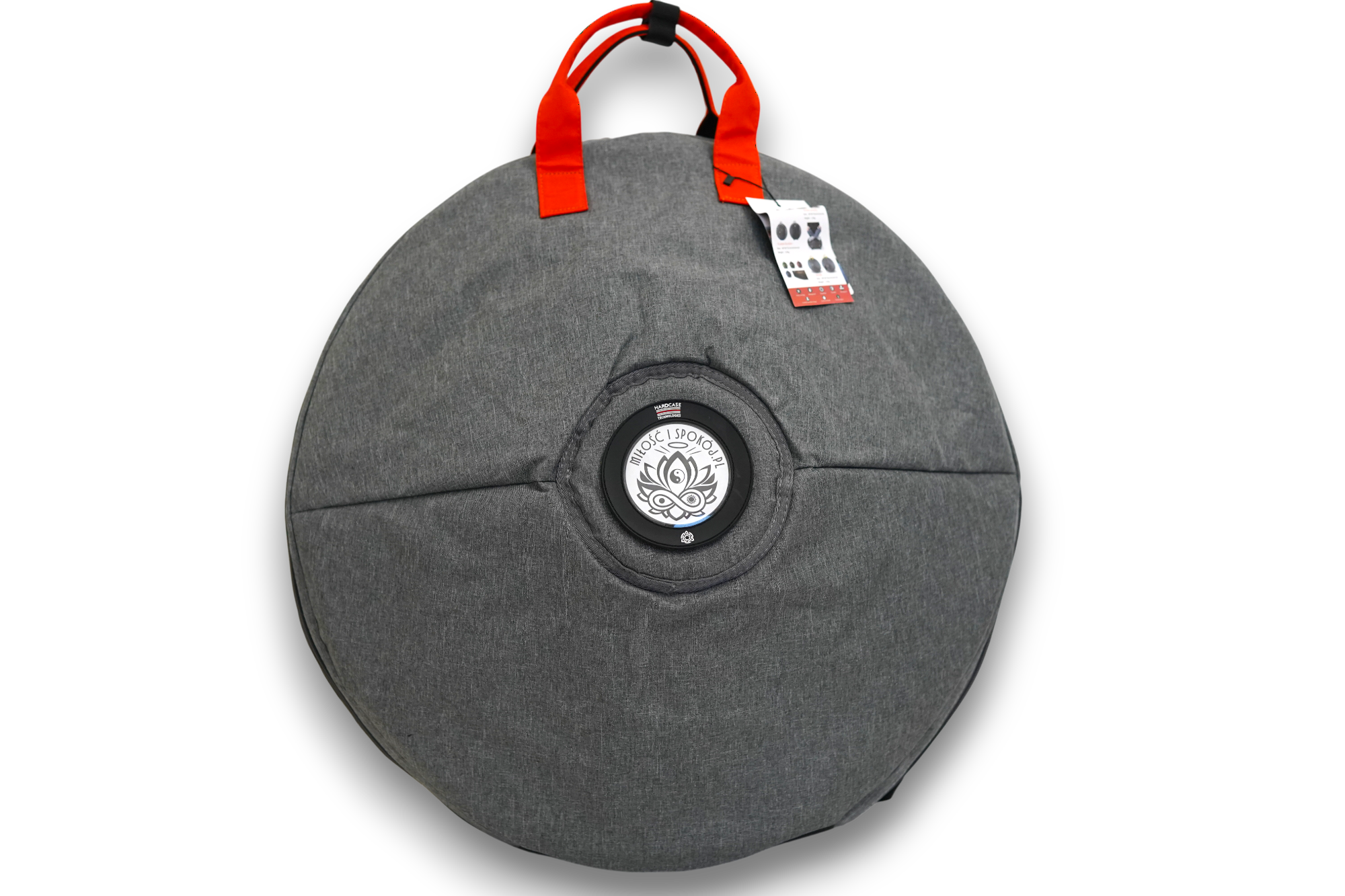
Case: Soft (free of charge) / Hard (+$125)
Extended E Scale Amara
This model combines 20 sound fields (13+7) – 13 at the top (E3, B3, D4, E4, F#4, G4, A4, B4, D5, E5, F#5, G5, A5) and 7 at the bottom ((C3), (D3), (F#3), (G3), (A3), (C4), (C5)). This wide range allows for the creation of both subtle melodies and elaborate, multi-layered compositions.
What does the E Amara 20 handpan sound like?
Premium stainless steel construction ensures clarity, depth, and long-lasting tones. The 432 Hz or 440 Hz tuning allows you to tailor the instrument to your preferences and playing style.
Case and protection
A soft case is included; for added protection, you can opt for a hard case at an additional cost.
Created with Love and Serenity
Before the handpan arrives, you receive a recording of your copy for approval—you hear it before it goes on the road. Before shipping, I personally check the tuning of each box, because I play the handpan and know what to listen for.
Note:
For detailed information about colors, please see sample color palette.
Keep in mind that the patina that forms on a handpan's surface may change color slightly over time. This doesn't affect the sound or tuning — it simply gives the instrument a unique, stylish vintage character.
Do you have any questions? Text me — I answer personally!
Want to know more about the Amara E scale before purchasing? Read the Amara / Celtic Minor scale guide →
FAQ
Q: What is the difference between the E Amara 20 handpan and the 13-note model?
A: The 20-note model (13 notes on the top and 7 on the bottom) offers a much wider tonal range. Additional notes on the lower dome extend the scale to include lower notes and add notes that allow for more complex harmonies, basslines, and chords. While the instrument requires more time to master, it offers significantly greater compositional, arranging, and improvisational possibilities.
Q: Which tuning should I choose – 432 Hz or 440 Hz?
A: 440 Hz is the musical standard used in orchestras. 432 Hz is slightly lower and preferred by meditation musicians and sound healers. The choice is purely a matter of preference—both tunings sound equally clear and stable.
Q: How long does it take to process and what does the order process look like?
A: The turnaround time is 2–3 months (one month less with the Express option). After placing your order and paying, you'll receive a video with the audio for your approval within a few weeks. Once everything's ready, I ship it within 1–3 days.