
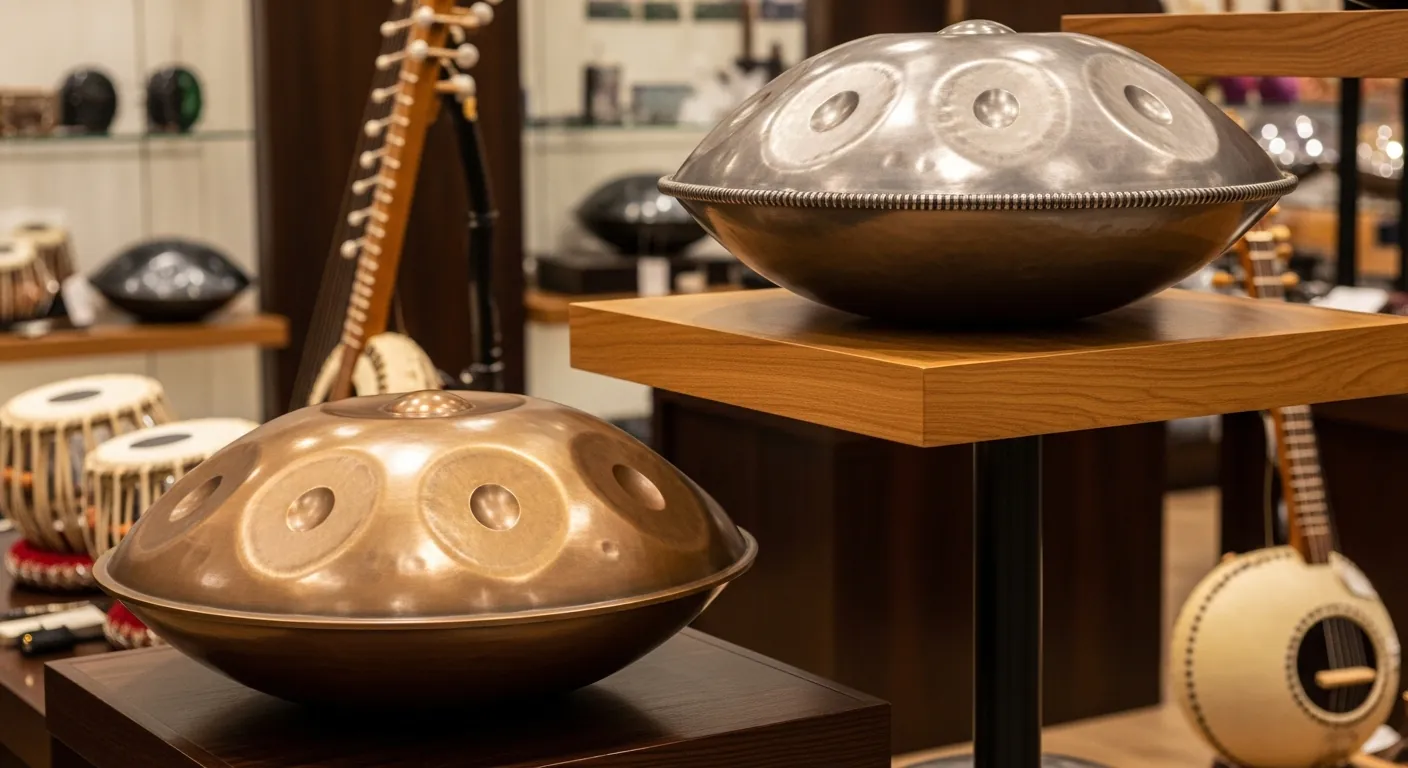
Hang™ is the registered name of an instrument created by a Swiss company PANArt in 2000—no longer produced today. Handpan is a generic name adopted for all subsequent instruments in this family, created by independent makers around the world. In practice, this means that only handpans are available on the market today—you can no longer buy the original hang. In this article, I show the origins of this division, how a handpan sounds and is constructed, and which playing techniques are worth learning to start with.
Table of contents
Handpan sound and music features
One of the most important elements of a handpan is its sound – full, saturated with overtones that give the sound spaciousness and depth. Handpan It consists of several hollow "hands" carved into a metal surface, each corresponding to a different note. By playing, you can build both calm, melodic phrases and more rhythmic, energetic passages—your playing technique determines whether the sound is subtle and quiet or powerful and dynamic.
Tool design and materials for handpan instrument
Handpan, souvent appelé à tort également hang drum, is an instrument consisting of two parts – the upper and lower-which form a characteristic shape resembling a "bowl " or"drums". Each of the parts of the instrument has a hollow area that is responsible for different sounds. The upper part has arranged "palms" (curved recesses), which are played, creating melodic sounds. The lower part, called the " kick”, is a space that is responsible for more bass, deeper tones.
Handpans are typically made of high-quality stainless steel or special metal alloys, ensuring durability and excellent acoustic properties. Thanks to the precise machining of the materials, the instrument produces a pure, rich sound, with every note clear and full.
Handpan vs Hang Drum Instrument - Terminology Discussion
This instrument is sometimes called a hang drum, hang, or handpan—and although these words blend in common parlance, they have different meanings. See where this nomenclature confusion comes from.
What is a hang drum?
The Hang (or rather, Hang™) is an idiophone instrument created in 2000 by the Swiss company PANArt—the prototype of today's entire family of instruments. "Handpan," in turn, is the name of a broader category: instruments based on the same concept, but created by independent makers around the world, in numerous variants and configurations.
Some musicians still use the name "hang" to pay tribute to the creators of the original – but in everyday language both names are interchangeable and mean the same thing to most players: an instrument with a similar sound and construction.
Hangdrum - the correct spelling is hang drum or handpan
„"Hangdrum" (written as one word) is one of the most common ways to search for this phrase—technically, it means the same thing as "hang drum": the original PANArt instrument, or, colloquially, any handpan. If you're looking for information about the hangdrum, you're landing on the exact same topic I'm describing in this article.
History and origin of handpan
Handpan (or hang drum), as already mentioned, comes from the "hang" instrument, which was created by Felix Rohner and Sabin Muller of PANArt. Inspired by traditional percussion instruments from different parts of the world, such as steel drums from the Caribbean, the creators of hangu have developed an instrument that combines the unique sound characteristics of metal with the spaciousness of tones and melodies. The first hang was created in 2000 and quickly gained popularity among musicians who were looking for a new, inspiring sound.
Over the years, other companies have started creating their own versions of the tool, now called handpan. Although some of these instruments differ in design details, they all retain the distinctive features of the original hangu: a round shape, hollow "arms" and a rich, harmonious sound.
Handpan instrument playing technique
The handpan game is simple and extremely creative. Although the instrument may seem difficult for people who have never played an instrument before, the basic techniques are fairly easy to learn. Here are some of them::
- Finger strikes - The main method of playing the handpan is to hit the hollow” hands " of the instrument with your fingers. Each beat evokes clear sounds that create a melody.
- Technika „thumb tapping” - This includes hitting different parts of the instrument with your hands delicately and accurately. This type of technique allows you to get very complex sounds and percussive effects.
- Different rhythms and accents - Handpan features also include different rhythms. While playing this instrument, you can play with accents, tempo and dynamics, creating interesting, complex compositions.
- Using your entire arm - Although the fingers are primarily used to extract sounds, many players also use their entire hands to create different keys and percussion effects.
- Chord techniques - Using different fingers to hit individual "hands", you can get chords and rich harmonies. This technique is relatively easy to learn and allows you to play more complex melodies.
Order handpan love and peace of mind
If you already know you want to start your handpan adventure or expand your collection, I invite you to order an instrument from Miłość i Spokój. Each handpan is custom-made—we work with you to choose the number of notes, scale, tuning, and color to make it truly yours. Before it arrives, I personally test each piece: I play it, inspect it, and tuning,, I'm listening.
I offer two series: Professional (430 stainless steel, makers with many years of experience) and Mystical (Premium stainless steel, makers with even more experience than in the Professional Series). The turnaround time is usually 2–3 months. See sample projects →
Take the first step and write what handpan you are interested in - also check out the guide: how to choose your first handpan!
Resume
The handpan gained popularity thanks to its easily recognizable sound—full of overtones, spacious, and created by precisely crafted "hands" on a steel surface. This instrument is accessible to both beginners and advanced musicians, and the variety of playing techniques allows for long-term development.
If you want to start your handpan adventure or expand your collection, please visit Miłość i Spokój - there you will find sample projects in various scales and my personal advice on choosing the model that suits your needs.
The key to playing the handpan is patience and experimenting with techniques – the rest comes with time and practice.
Frequently Asked Questions about handpan
With regular practice, the basics can be mastered in a few weeks, but it takes months or years to fully master the instrument, depending on commitment and passion.
Handpan, hang Drum, Steel Drum, and Space Drum are all steel percussion instruments that vary in history, design, and the way they are played. The Handpan is a modern instrument made of two connected steel hemispheres that is played with the hands.
Hang Drum is the name of the first handpan created by the Swiss company PANArt-its own name, often mistakenly called "hang drum".
The steel pan is a traditional Caribbean instrument made from a single steel barrel, played with chopsticks.
Space Drum is usually another name for a similar handpan, which differs in design details.
In general, handpan, hang drum and space drum are similar and played with hands, while steel drum is a different traditional percussion instrument.
Yes, handpan is perfect for beginners, thanks to its intuitive design and easy creation of harmonious sounds from the first attempts.
Lessons are available online (videos, courses), as well as from local teachers and at seminars dedicated to this tool.
At Miłość i Spokój, the Professional Series starts at around 5,000 PLN, and the Mystical Series starts at around 6,000 PLN—exact pricing depends on the number of notes, scale, and options selected. For full price ranges, see the guide. Handpan - Price, Guide.
Choose the instrument according to the scale that suits you best (e.g. D Kurd for melancholic, D Major for joyful melodies), and also pay attention to the number of notes and the tuning frequency (e.g. 10-12). 440 Hz for playing with other instruments, 432 Hz for relaxation). More about how to choose your first handpan you can read in the article "How to choose your first good handpan"A Beginner's Guide," where you'll find practical tips and advice to help you make the best choice.
Clean the instrument regularly with a soft, dry cloth, avoid sudden changes in temperature, and use special oils to protect against oxidation.
Yes, handpan works great both as a duo and in large groups, allowing you to create interesting arrangements and harmonies.
The Handpan is not a very loud instrument – its sound is quite subtle and works well at home and in places where we don't want to disturb others.

I run the Miłość i Spokój brand and personally test every instrument before shipping—playing it, checking its tuning, and listening. I work with handpan as a musician, a sound healing practitioner, and someone who simply can't stop playing.