
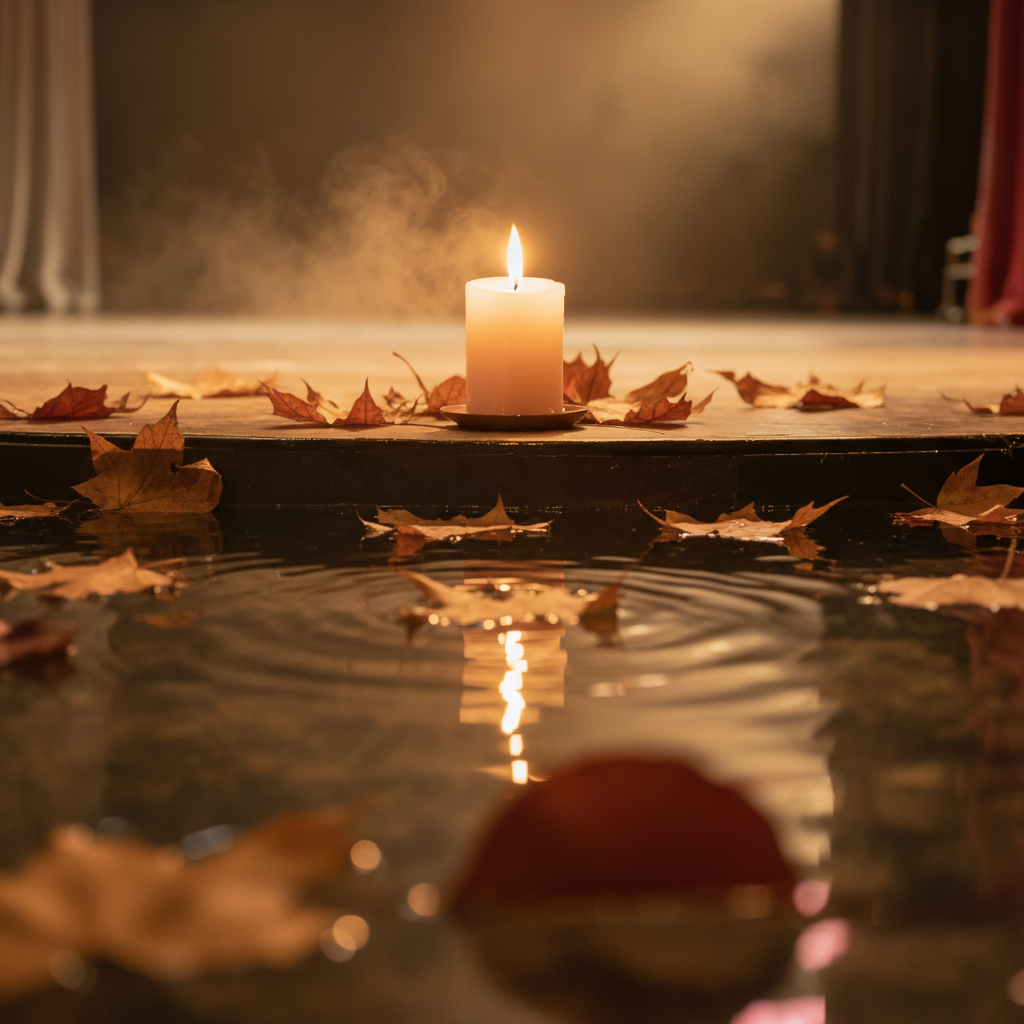
There are instruments you play. And there are instruments that play you.
The handpan belongs to the latter group. I know this not from theory—I know it because I play it myself and have seen what happens to people when they first touch the surface of the notes. Silence. Concentration. Something difficult to define but easy to recognize.
That's why many people return to the handpan every day—not to practice technique, but to get back to themselves for a moment.
Consciousness—being present here and now—is not a state that can be explained. It can only be induced. And it is in this respect that the handpan is unrivaled.
What exactly is this „awareness”?
I don't want to delve into twenty pages of philosophy. Let me put it simply: consciousness is a state in which you're no longer on autopilot. You stop thinking about what was and what will be. You are here. You breathe. You hear.
Eckhart Tolle put it this way: unless you're conscious, you're on autopilot. I agree—and I'd add that handpan This is one of the most effective "autopilot switches" I know of.
Consciousness can be considered on several levels:
On a physical level, it's recognizing what you feel in your body. The tension in your shoulders. Your breathing. The warmth of your hands on the metal of the instrument.
On a mental level, it is observing your own thoughts instead of being dragged by them.
On a spiritual level, the feeling of being part of something bigger. You don't have to understand it. You just have to feel it.
Why does the handpan affect consciousness better than other instruments?
The sound, which lingers for several seconds after each strike, forces you to listen—not think. You can't play the handpan and plan your purchases at the same time. The sound simply doesn't allow it. It pulls you into the present without asking for permission.
Some specific reasons why handpan supports states of deep mindfulness:
Sustain that forces you to listen. Each note lives for a few seconds. There is silence between the beats. This silence is part of the music—and part of the practice.
Minor and pentatonic scales promote calm. Kurd and Amara are minor scales, Pygmy is pentatonic. Most players describe all three as "peaceful." They don't excite. They invite you in. If you're looking for an instrument for meditation or ceremony, this is where choosing a scale begins.
Customization 432 Hz and 440 Hz. Both have their place. Many practitioners describe 432 Hz as warmer, more "inner." 440 Hz sounds more confident, more classical. Which is better? It's up to you—I'll be happy to help you choose.
Intuitive gameplay from the first touch. You don't need to know how to play any instrument. Just strike. The handpan "guides" itself—every note in the scale sounds good with every other.
Handpan in ceremony and sound healing
More and more yoga teachers, therapists, and ceremonies—cacao, intention circles, and tranquility rituals—are using the handpan as an instrument for working with group consciousness.
I understand why. The Handpan doesn't dominate the space. It doesn't drown it out. It draws attention subtly, like something you hear in the distance and want to follow.
It's something that stems from the very nature of the sound: the first strike, and the entire group's attention naturally coalesces. The silence becomes different. Deeper. More communal.
If you work with groups and are looking for an instrument for your practice, please contact me. We'll discuss which scale and tuning will best serve your work. contact.

How to choose a handpan for awareness practice?
I hear this question often. And there's no single answer—but there are a few good starting points.
Scale. If you crave tranquility and introspection, look for minor or pentatonic scales. Kurd (minor) and Pygmy (pentatonic) are classics for meditation. If you crave energy and joy, major scales will shine brighter.
Number of notes. A 9-note handpan is simpler and sufficient for most ceremonies and meditation sessions. Models with 15–21 notes (so-called mutants) offer more musical possibilities—but also demand more from the player.
Workmanship. I personally test every instrument I send. I check the tuning of every note, the sustain, and the clarity of the sound. I don't send anything I wouldn't play myself.
Budget. The Professional Series starts at around 5,000 PLN—instruments handcrafted by artisans with years of experience. The Mystical Series features even more experienced makers, deeper sustain, and a warmer tone—pricing varies depending on the number of notes and configuration. If you're not sure where to start— Write. I'll tell you honestly what makes sense for your practice.
FAQ - Frequently Asked Questions
No. The handpan is intuitive—every note in the scale sounds harmonious with every other. Just touch and listen.
I most often recommend Kurd and Pygmy – both have a warm sound that is conducive to relaxation (Kurd is a minor scale, Pygmy is a pentatonic scale). A detailed description of all scales can be found in guide to the scales.
Many practitioners describe 432 Hz as more "inner" and natural. 440 Hz is the standard for classical music and stage—a more confident sound that works well with other instruments. You can order a handpan in both tunings.
Depends on model and availability. Message me—I'll respond with specifics, no generalities.
Instead of a summary
Carl Jung wrote that you can't change anything until you become aware of the unconscious. I agree. And I know that for many people, this awareness begins not with a book, not with therapy—but with a sound that resonates long after the hand has fallen.
Handpan does something simple: it freezes time for a moment. And in that moment, everything you're looking for is there.
If you want to experience it for yourself — check out the online handpan store Or contact me directly. I'll help you choose an instrument that will serve your practice for a long time.

I run the Miłość i Spokój brand and personally test every instrument before shipping—playing it, checking its tuning, and listening. I work with handpan as a musician, a sound healing practitioner, and someone who simply can't stop playing.