
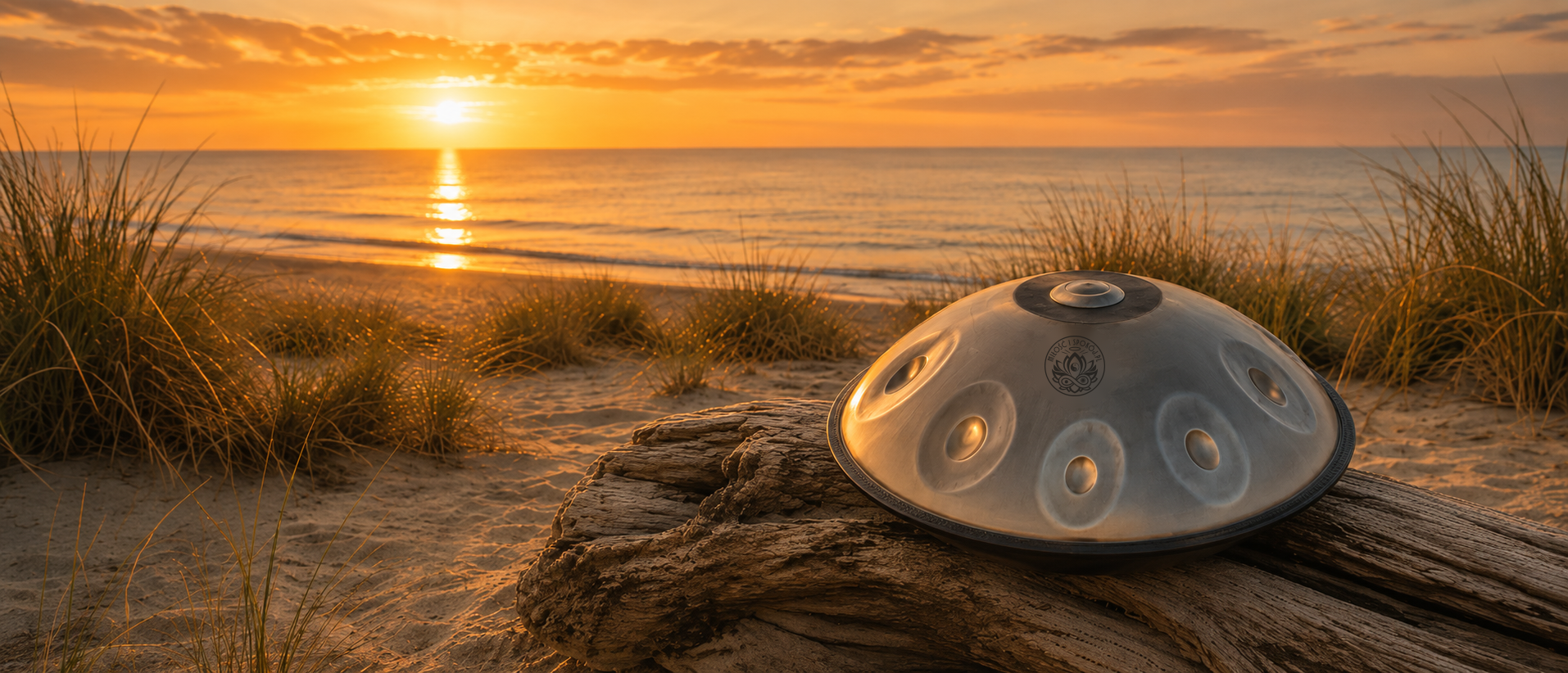
Choosing your first handpan doesn't have to be a choice preceded by weeks of analyzing scales, materials, and configurations. Initially, the most important thing is that the instrument's sound encourages you to play and the sound layout is intuitive.
There's no single scale that's perfect for everyone. However, there are more universal scales and those that have a more distinct, distinctive feel. If you don't have a firm favorite yet, a good starting point is D Kurd handpan in 9–10 note arrangement.
D Kurd is a minor scale, melodic, and versatile. It allows for a calm, rhythmic, and intuitive playing style, and its notes blend naturally together. This doesn't mean that everyone has to choose this scale. However, if after listening to several options you're still unsure which one is right for you, D Kurd can be a safe and reliable first choice.
Below, I'll show you how the most popular options differ and which parameters are actually worth paying attention to—without delving into details that don't matter much at first.
What really matters when choosing your first handpan?
Several elements influence sound and playing comfort, but you don't have to treat each one as a separate, difficult decision. In practice, all you need to do is choose the scale type, the number of notes, and the material that fits your budget. The rest can be determined based on these three pieces of information.
What scale should I choose for my first handpan?
The scale is primarily responsible for the instrument's mood. You don't need to know music theory—just listen to a few recordings and see which sound most appeals to you.
- Handpan D Kurd — a warm, slightly melancholic, and very versatile minor scale. It works well in calm melodies, simple rhythms, and free improvisations. The sounds blend naturally, making D Kurd one of the most frequently chosen first handpans.
- Handpan Amara / Celtic Minor — calm, soft, and reflective. You might like it more if you're looking for a gentle, meditative sound.
- Handpan Pygmy — darker, earthier, and trance-like. It has a more defined character, so it's worth choosing if this sound particularly attracts you from the start.
- Handpan Aegean — brighter, spacious, and slightly oriental. This is an interesting option for those looking for a more open and unusual atmosphere.
💡 How not to get stuck comparing scales? Listen to a few short recordings, preferably with headphones. If you clearly like one scale better, go with that feeling. If they all sound good and you're still having trouble deciding, choose a more versatile solution. The first handpan should primarily encourage you to play, not be the result of weeks of analysis.
You can find more information about the sound of individual scales in handpan scale guide.
What key and tuning to start with?
Key influences the pitch and character of the sound. Lower tunings are deeper and calmer, while higher tunings sound brighter and more expressive. However, when playing for the first time, you don't need to analyze many keys (article about tones) — what is more important is whether you like the atmosphere of the entire scale.
The choice between 432 Hz and 440 Hz is similar. It's more important if you plan to play with other instruments or have specific preferences. If you're buying a handpan primarily for solo playing, the difference between these frequencies won't matter as much. I describe the differences in more detail in article about types of handpan tuning.
What steel should you choose a handpan from?
The type of steel affects the sound, sustain (i.e. the length of the sound), rust resistance and ease of care.
| Type of steel | Sound quality | Sustain | Rust resistance | Care | For what? |
|---|---|---|---|---|---|
| Premium stainless steel | deep, warm, rich | very long | exceptionally high | minimal | quiet game, meditation, outdoors |
| Stainless steel | bright, clean, transparent | long | high | very simple | universal game, also outdoors |
| Nitrided steel | classic, earthy | shorter | mean | regular | rhythm and more dynamic play |
In my offer you will find the first two options - stainless steel (Professional Series) and Premium Stainless Steel (Mystical Series). I show nitrided steel in the table for comparison purposes only, so you can see the full picture of the market.
For a beginner, the most practical choice will usually be stainless steel. It's durable, easy to care for, and has a long sustain. The Premium version has a slightly longer sustain, but above all, sounds deeper, warmer, and more velvety. The standard stainless steel version, on the other hand, allows you to lower your budget without sacrificing a good first instrument.
For details, you can check out the article: Premium vs. Stainless Steel.
How many notes to start with?
For a first instrument, 9–10 notes are perfectly sufficient. This arrangement allows for freedom in learning melody and rhythm without being overwhelming. If you're choosing between 9 and 10 notes, it's often best to go with 10. Many online tutorials are written specifically for 10-note handpans, and the additional sound significantly expands your playing options.
More notes doesn't automatically mean a better instrument. Expanded configurations are useful for those who already know what additional sounds they need. A simpler setup makes playing intuitive at first.
How much does a good handpan cost?
Each handpan is made to order—I don't have any ready-made instruments on the shelf. The models shown on the website are sample designs showing scales, configurations, and approximate price ranges. The final price depends primarily on the series, type of steel, and number of notes.
- Professional Series (stainless steel): from approx. PLN 5,000, on sale from PLN 4,700.
- Mystical Series (Premium stainless steel): from approx. PLN 6,000.
For your first instrument, you usually don't need an elaborate setup, extra notes on the bottom, or unusual tunings. Even a basic 9-10-note arrangement provides a fully-fledged instrument that will allow you to develop your playing skills for years to come.
📖 A complete list of what determines the cost and how to choose a model that fits your budget is included in the guide: Handpan - price and what really influences the valuation.
Not sure which series will be best for your budget? Text me and provide an approximate budget and the scale that catches your eye the most. If none of them stand out, I'll suggest a universal setup to get you started—without overwhelming you with options.
How do you recognize a good handpan?
I take responsibility for all the technical details. Before the handpan is delivered to the client, I play it myself and test its sound in practice. I listen for clarity, sustain, whether the scale falls naturally under the fingers, and whether the entire instrument is a pleasure to play.
During production, you also receive a recording of the specific piece prepared by the maker. This means you can hear your handpan before final delivery, and quality control isn't solely your responsibility.
I check primarily:
- Clean, even sound — each note sounds clear, without false overtones, and blends naturally with the rest of the scale.
- Long, natural sustain — you hit it once and the sound fades away slowly and smoothly, without any crackling or humming.
- Careful finishing — even, consistent form of the domes and precision of workmanship.
- Implementation by proven makers — each piece is made to order, not as a random mass-produced product.
How to start playing your first handpan?
- Start with simple motifs — let your hands find the rhythm and don't try to play complicated melodies right away.
- Fingertip strike — a fast, rebounding strike produces a clear and full tone.
- Exercise regularly — even five minutes a day allows you to quickly become familiar with the instrument.
- Listen to other players — observing different styles helps you find your own ideas.
If you are just starting out, I will write it down step by step in a separate text: Handpan game - how to start.
Where to buy your first handpan?
I run the Miłość i Spokój brand in Gdańsk. Each instrument is custom-made, although a list of specifications isn't necessary to get started. Just tell me what sound you like, how you want to play, and what your budget is.
If you already have a favorite scale, we'll select the right material and note layout for it. If you're still unsure what you're looking for, we'll start with a proven, universal setup and narrow down your choices to the essentials.
This is what it looks like for me:
- we determine the character of the sound and the budget, without the need to know technical terms,
- you receive a specific configuration suggestion instead of a long list of possibilities,
- the handpan is hand-tuned to individual order,
- you receive a recording of your copy before you pick it up,
- I personally check each instrument before shipping.
I deliver throughout Poland and abroad - to Warsaw, Poznań, Wrocław and the rest of the country, usually within 1–3 days from the moment the instrument is ready. Order fulfillment usually takes 2–3 months.
See sample projects in the store or text me. We can choose the model you want to order together—just describe your sound expectations. If you don't have specific preferences yet, I'll offer a simple and universal starting point.
FAQ
Ideally, a Kurd or Celtic Minor/Amara scale—melodious and forgiving. Add 9–10 notes and stainless steel or premium stainless steel. This setup provides long sustain and ease of maintenance, while the sound is captivating and stays with you for a long time.
The Professional Series starts at around 5,000 PLN, the Mystical Series (premium stainless steel) at around 6,000 PLN. Each handpan is made to order and priced individually—more complex designs can reach several thousand PLN.
Typically 2–3 months. The Express option shortens the order processing time by about a month. I don't keep ready-made instruments in stock—each one is made to order.
Hang drum is an original instrument from PANArt. Handpan is a broader category of instruments with the same design, created by independent makers. Today, the two terms are often mistakenly used interchangeably—I explain more in the following articles: hang drum a handpan and handpan history - where does it come from.
Handpany for advanced and beginners

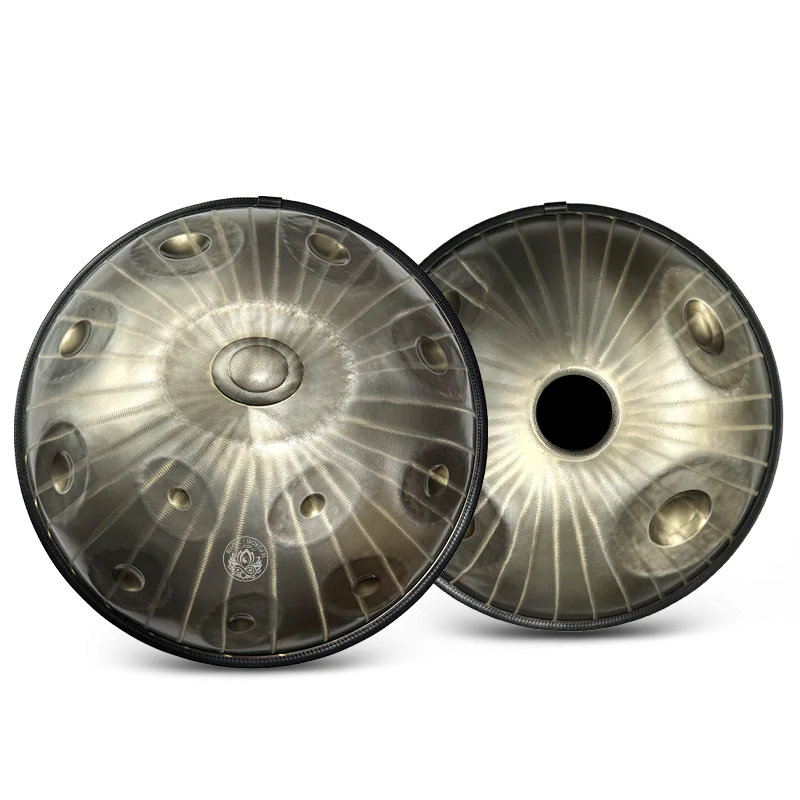
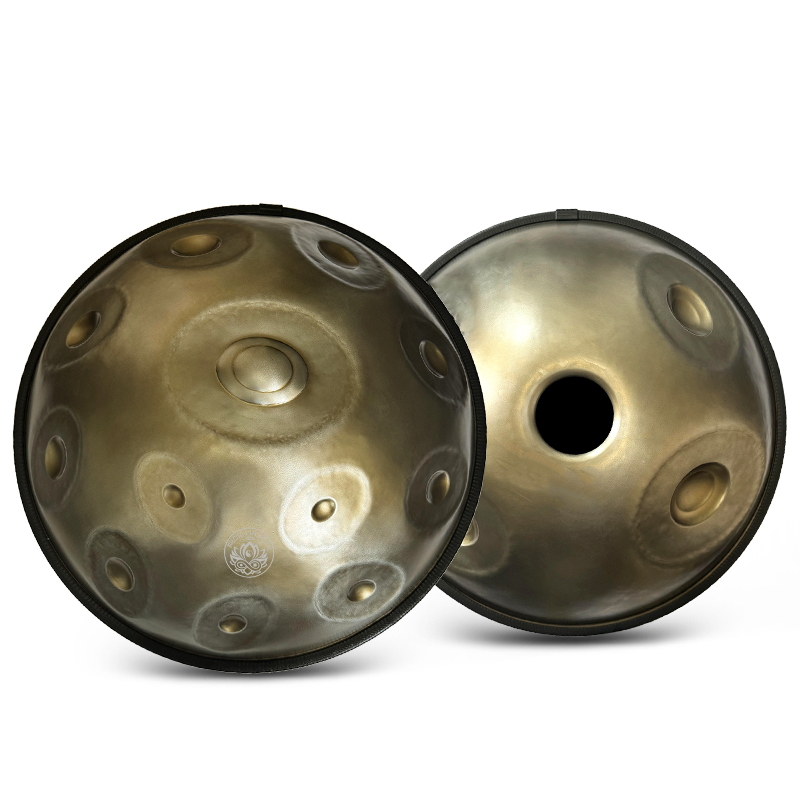
Handpan D Kurd 10 Premium Stainless Steel (Free Cover)
6100,00 zlotyHandpan D Kurd 16 (12+4) Silver spiral 432 Hz
10000,00 zlotyHandpan F#3 low Pygmy 15 (12+3) Premium Stainless Steel 432 Hz
9600,00 zlotyHandpan D Kurd 10 stainless steel (Professional series)
5300,00 zloty



I run the Miłość i Spokój brand and personally test every instrument before shipping—playing it, checking its tuning, and listening. I work with handpan as a musician, a sound healing practitioner, and someone who simply can't stop playing.