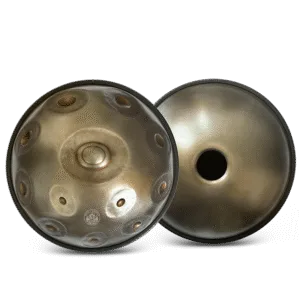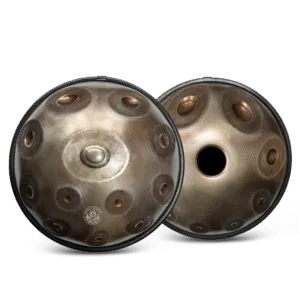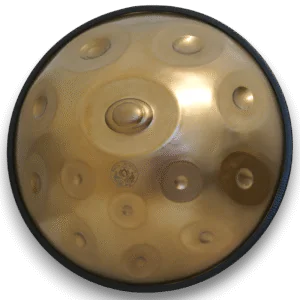
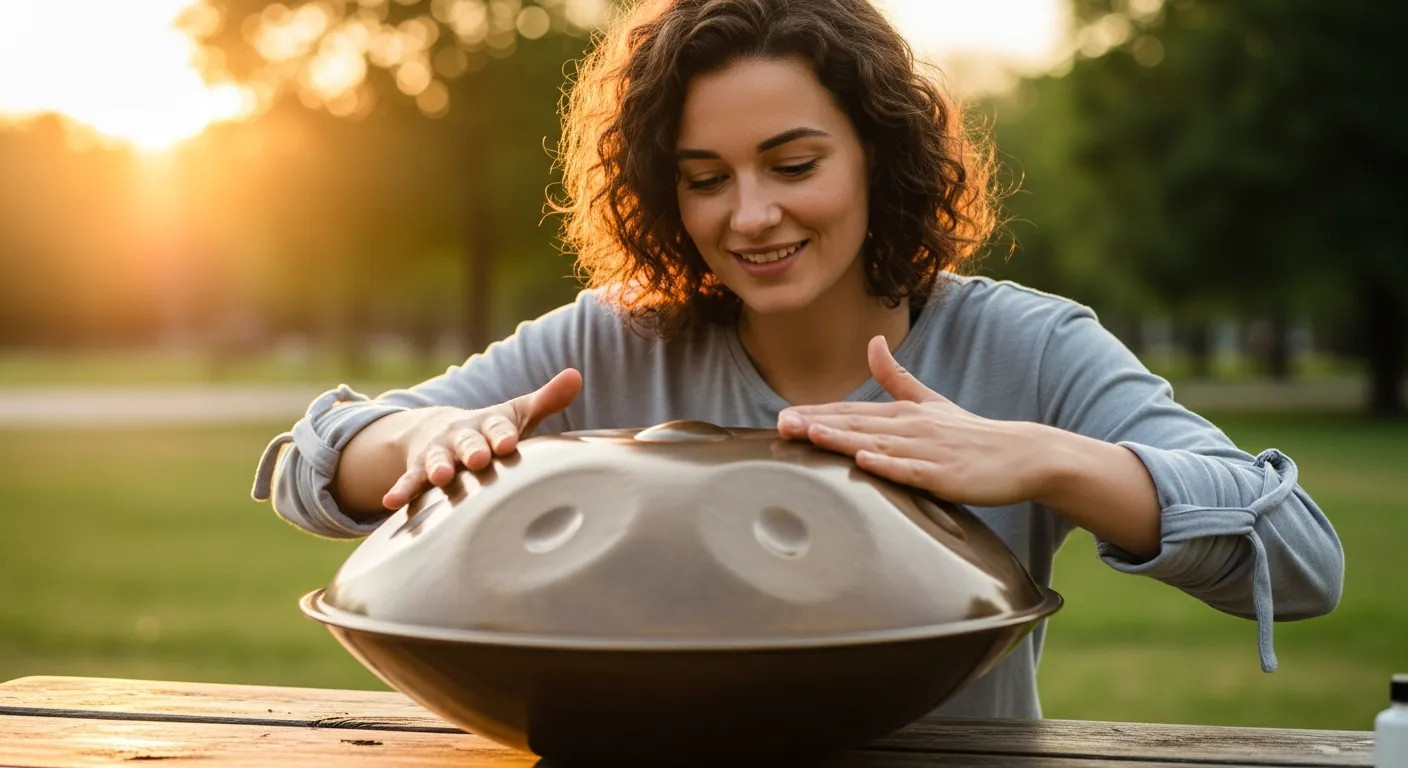
Handpan is an instrument that delights with the richness and depth of its sound – it can be both very bassy and relaxing, or bright, high-pitched, and energetic. Choosing the right key, scale, and construction of the instrument is crucial to its character. If you want to choose your first instrument, read the article:How to choose your first good handpan? A beginner's Guide”.
What is the difference between bass and tweeter sound?
- Bass (low) sounds: Deep, warm, soothing - ideal for meditation, relaxation and quiet play. They give a sense of 'grounding' and a pleasant vibration in the body.
- High-pitched sounds: Bright, penetrating, energetic - great for dynamic playing, improvisation and also in an ensemble where they have to 'cut through' other instruments.
The pitch depends on the frequency - the higher it is, the more high-pitched the sound is.
The most popular handpan tones and their characteristics
| Tone (Ding) | Example notes | Nature of sound | Example frequency (Hz) |
|---|---|---|---|
| F (e.g. F Pygmy) | F, G, Ab, C, Eb, F, G, Ab | Very deep, earthy, bassy | F3 ≈ 174,61 |
| D (e.g. D Kurd) | D, A, Bb, C, D, E, F, G, A | Versatile, warm, deep | D4 ≈ 293,66 |
| C (e.g. C Dura) | C, D, E, F, G, A, B, C | Bright, cheerful, light | C4 ≈ 261,63 |
| E | E, G, A, B, C, D, E | Medium, slightly light | E4 ≈ 329,63 |
| G | G, A, Bb, C, D, E, F, G | Balanced, versatile | G4 ≈ 392,00 |
| C# (Cis) | C#, G#, B, C#, D#, E, F# | Very bright tweeter | C#5 ≈ 554.37 |
How do you choose a handpan with a bass or treble sound?
If you are looking for a bass sound:
- Select hand drum from a central note (ding) in a lower key: F3, D3, C3.
- Scales: F Pygmy, D Kurd, C Dura, F#3 Low Pygmy.
- Instrument size approximately 53 cm favours deeper tones.
If you care about treble sound:
- Put your handpan with ding in a higher key: C#5, F5, C5.
- Scales: C# Minor, G Major, high C or D versions.
- A smaller instrument (approx. 50 cm) will have a brighter, more penetrating sound.
Examples of scales and their sounds
- D Kurd (D minor):
Warm, deep, versatile - very popular with beginners and for meditation. - F Pygmy:
Very low, earthy, ideal for relaxation and body work. - C Dura:
Bright, cheerful, light - great for relaxing and pop music. - C# Minor:
Very bright, expressive, tweeter - ideal for dynamic playing and ensembles.
Material – Stainless Steel vs Premium Stainless Steel
| Feature | Stainless steel | Premium stainless steel |
|---|---|---|
| Sound quality | Clear, clean, with pronounced highs | Warm, deep, with emphasised bass |
| Sustain | Long, wide dynamic range | Very long, soft, harmonically rich |
| Nature | Versatile, works well in a variety of playing styles | Relaxing, ideal for meditation and soloing |
| Stability | Very high, easy care | Tall, needs a bit more care |
| Size | Standard approx. 53 cm | Standard approx. 53 cm |
Stainless steel provides clarity and versatility of sound, performing well in both low and treble tones. Premium stainless steel emphasises depth, warmth and length of sound, making it an excellent choice for quiet playing and meditation.
What else influences the sound of the handpan?
- Playing technique:
The way it is struck and damped helps to bring out extra bass or emphasise treble. - Customization:
432 Hz - more relaxed, 440 Hz - easier integration with other instruments.
Examples of note frequencies
| Sound | Octave | Frequency (Hz) |
|---|---|---|
| F3 | 3 | 174,61 |
| D4 | 4 | 293,66 |
| C4 | 4 | 261,63 |
| C#5 | 5 | 554,37 |
Summary:
When choosing a handpan, pay attention to tonality, size (approximately 53 cm), material and scale. For meditation and relaxation, the following will work best low tones (F, D, C) and Premium Stainless Steel. Stainless steel is ideal for versatile playability and bright tones. Test instruments live or listen to recordings to find the sound that best suits your needs.
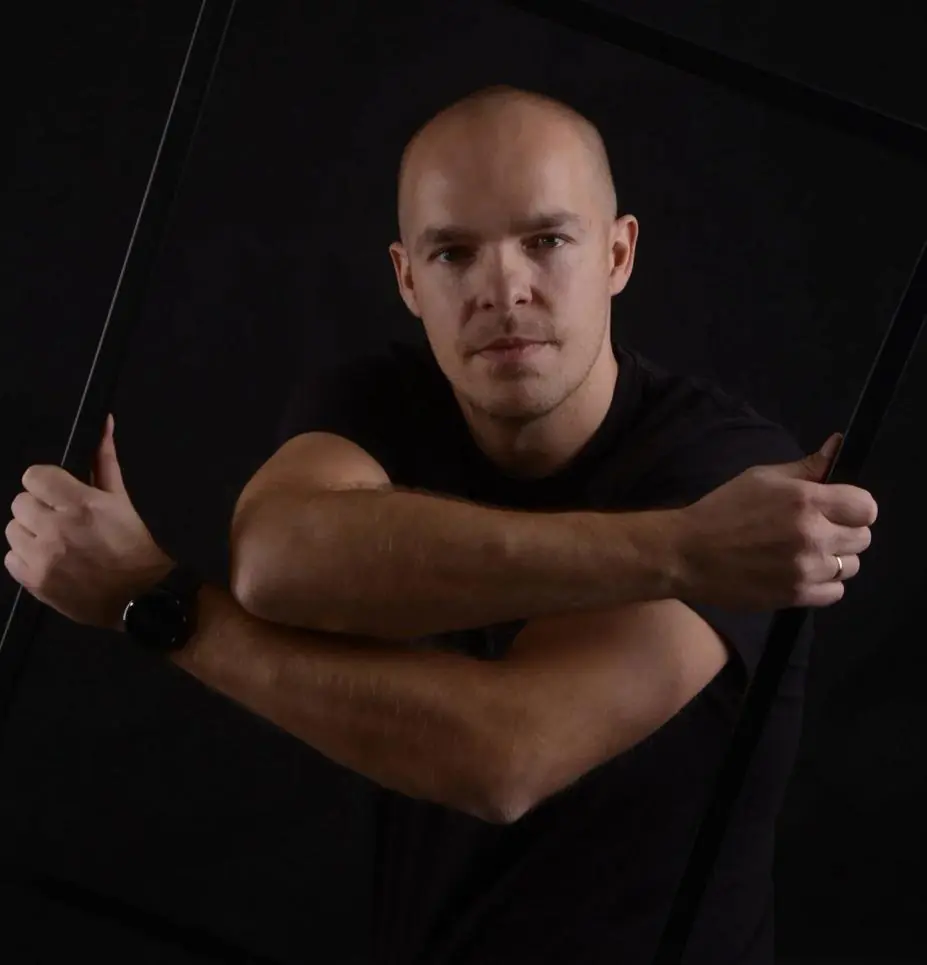
I am a custom handpans manufacturer, I live in Gdansk. I'm launching a brand
offering instruments with meditative sound. I'm passionate about music-not just mindfulness and ambient music.